
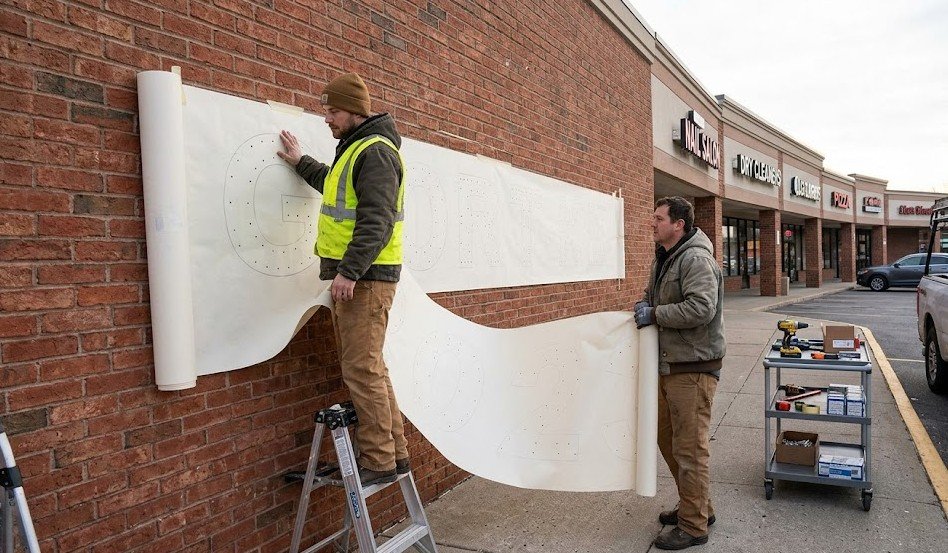
The Great Paper Kite of 2023
It’s a brisk Tuesday morning. Two installers arrive at a strip mall to mount a 25-foot-long set of individual flush-mount letters directly onto a brick wall. To know exactly where to drill the hundreds of holes for the wires and mounting studs, they use a “pattern”—a massive, full-scale roll of paper with the hole locations pre-plotted.
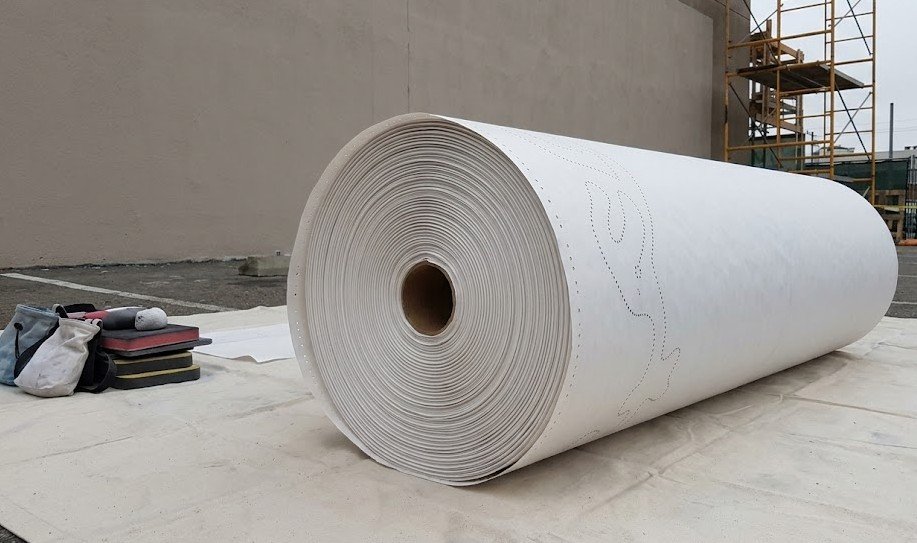
The problem? It’s blowing 25 MPH.
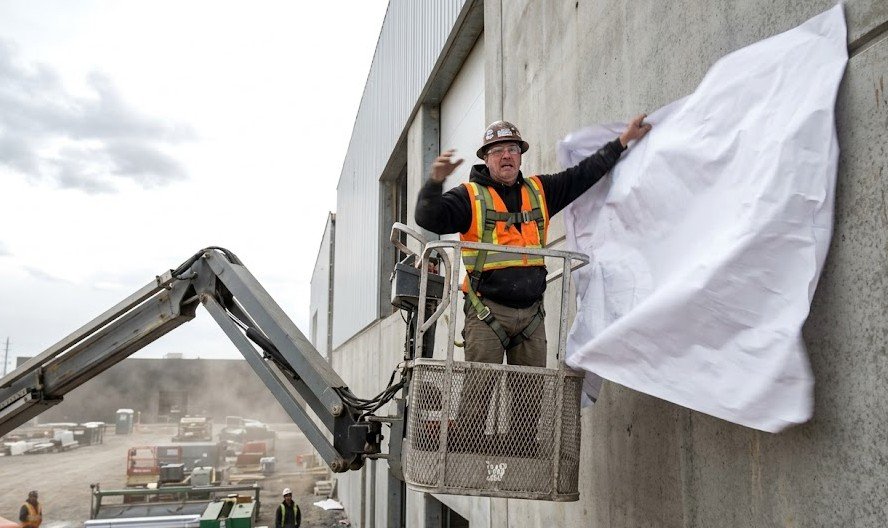
The installers unroll the first 10 feet of the paper pattern while standing on a boom lift 20 feet in the air. The wind immediately catches it.
What was supposed to be a precision drilling template instantly turns into a 25-foot horizontal sail. One installer is desperately trying to slap masking tape onto dusty brick, while the other is essentially wrestling a giant, angry kite that is trying to pull them out of the lift basket. It is absolute chaos 20 feet above the pavement.
This is why installers sometimes opt for aluminum or rigid plastic drill templates on windy exterior days, rather than standard paper. When paper is used, installers rely on heavy-duty duct tape and a technique of unrolling and taping just a few feet at a time. The holes on these patterns are usually created by a plotter pen, or traditionally via “pouncing” (burning tiny holes in the paper that the installer taps with a chalk bag to leave a perfectly placed dust mark on the wall).
Comments (0)
No comments yet. Be the first to comment.