The Comic Sans Catastrophe: Why Bad Fonts Cost You Money
Imagine you are looking for a ruthless, high-powered defense attorney to keep you out of jail. You pull up to their office building, look at their massive, expensive illuminated sign, and the name “Goldberg & Associates” is written in Comic Sans.
Are you going inside? Absolutely not. You are driving away because that sign just told you your lawyer is going to defend you using crayons.
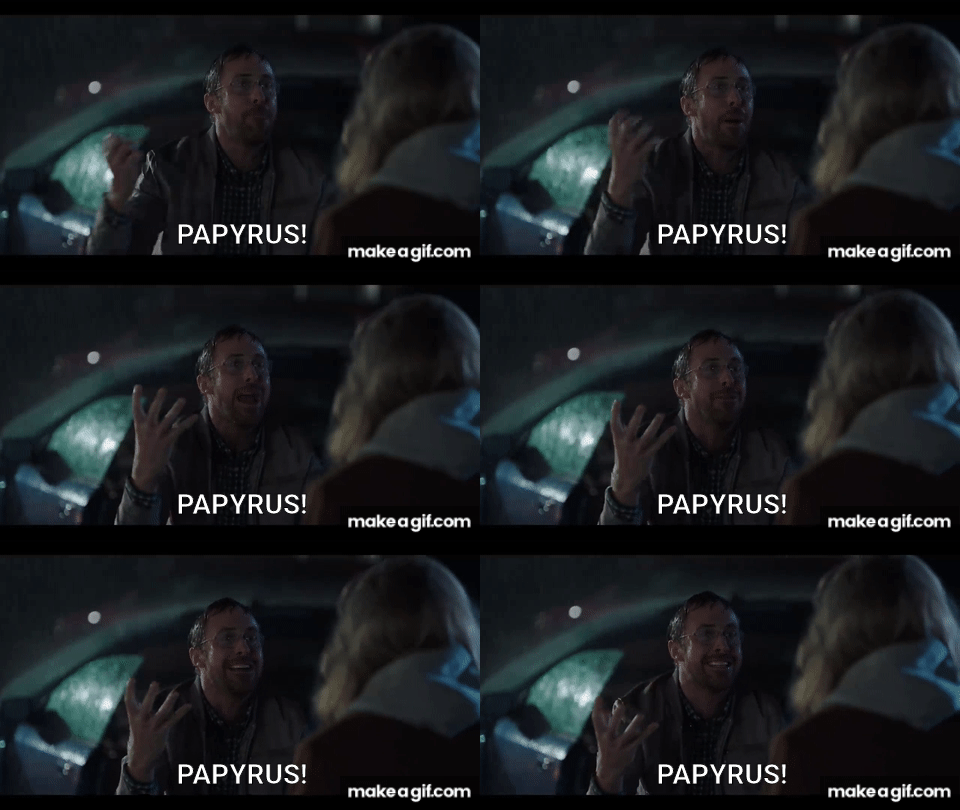
In the signage industry, typography isn’t just about making things look “pretty.” It is a psychological weapon. The font you choose dictates your brand’s entire personality before a customer ever walks through your doors.
Today, we are looking at the three deadly sins of signage typography, and how to choose a font that actually makes you money.
Sin #1: The “Identity Crisis” Font
Every font has a voice.
- Serif fonts (like Times New Roman, with the little feet on the letters) sound like a British butler. They say: Established, Trustworthy, Traditional. (Perfect for banks and law firms).
- Sans-Serif fonts (like Helvetica) sound like a tech CEO. They say: Modern, Clean, Efficient. (Perfect for tech companies and modern retail).
- Script fonts sound like a wedding invitation. They say: Elegant, Boutique, Fancy.
When your font’s voice doesn’t match your business, the customer’s brain rejects it. You wouldn’t use a bloody, dripping Halloween font for a daycare center, right? (God, we hope not).
Sin #2: The Kerning Catastrophe
“Kerning” is the graphic design term for the space between individual letters. On a computer screen, tight kerning looks modern. On a glowing 20-foot sign, tight kerning is a lawsuit waiting to happen.
When letters are placed too close together on an illuminated sign, the light bleeds. The letters blur into each other. Suddenly, an “r” and an “n” merge together to look like an “m”.
If you own a store called “Burner’s Hardware,” and your “r” and “n” blur together… well, you can see how you might attract the wrong kind of foot traffic.
Can You Still Read the Sign?
Move the slider to simulate motion blur, like seeing a sign while driving by.
Simple Bold Font
Clean, readable, and built for fast recognition.
Condensed Font
Looks stylish, but starts to compress when viewed quickly.
Fancy Script Font
Pretty up close, but the first to fall apart with motion.
The Golden Rule of Sign Typography
When investing in a permanent architectural sign, boring is usually better than "quirky."
Save the complex, highly decorative fonts for your menus, your brochures, and your website. For your main exterior sign, you want thick lines, high contrast, and generous spacing. You want a sign that shouts your name clearly, even to a distracted driver in a rainstorm.
Tell Us The Truth: The Worst Font Bracket
As a society, which font do we need to permanently ban from business signs?
Comments (0)
No comments yet. Be the first to comment.