Why You Keep Pulling Push Doors And How Signage Fixes It
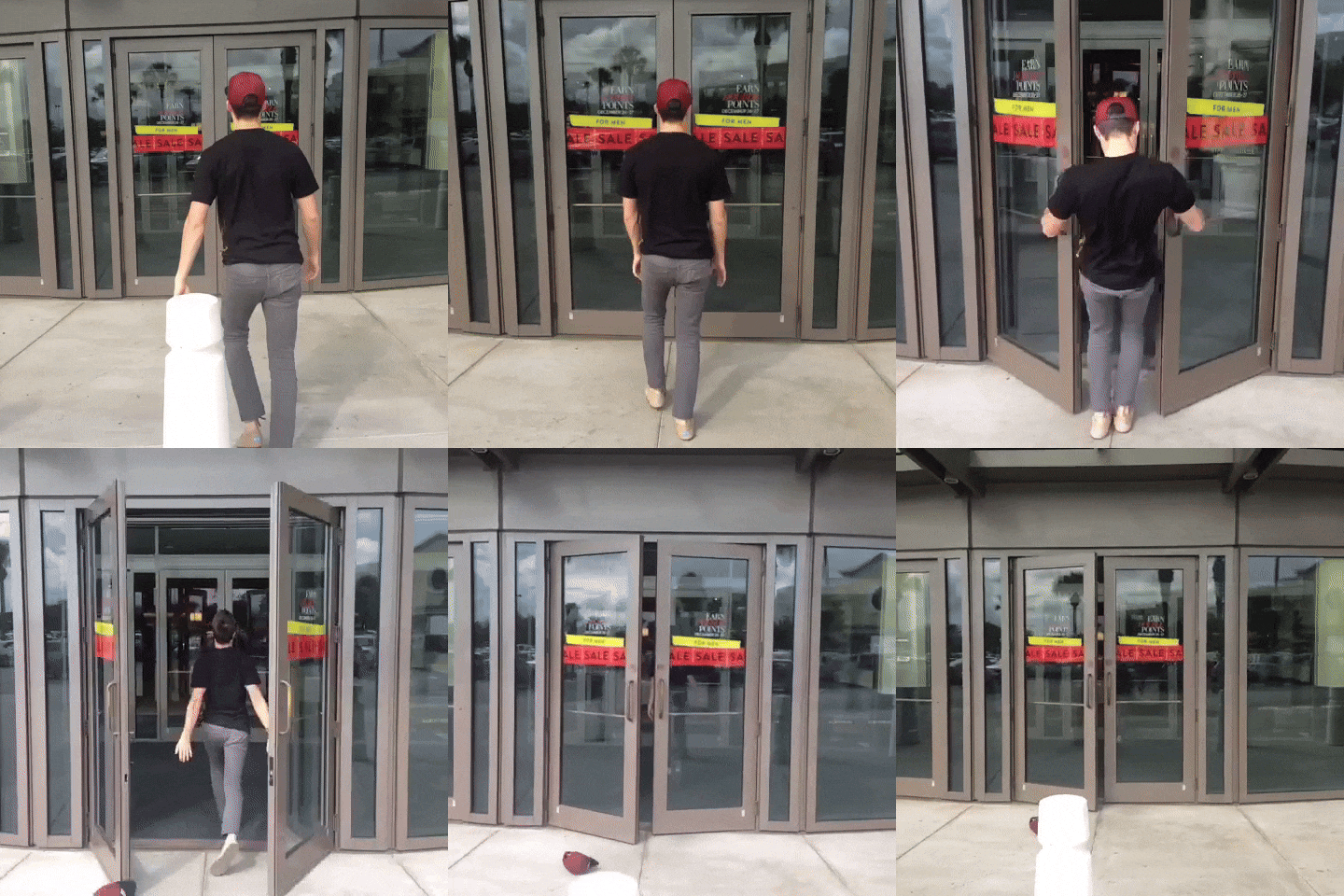
Picture this: You are walking up to a coffee shop. You look cool. You feel confident. You grab the vertical handle of the glass door and give it a firm, authoritative yank.
Clunk.
The door doesn’t budge. You rattle it again. Inside, a barista makes eye contact with you and points pityingly at a tiny, peeling piece of vinyl on the glass that says “PUSH.” Your ego deflates as you stumble inside.
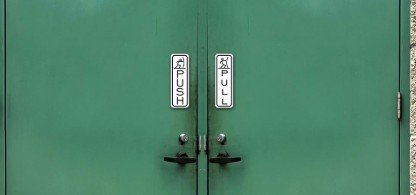
Don’t be embarrassed! You didn’t fail a basic intelligence test—you are just the victim of bad design. In the design world, we call this a Norman Door. And today, we’re going to look at why our brains completely ignore door signs, and how the right signage is the only way to fix bad architecture.
What is a Norman Door?
Named after Don Norman, author of The Design of Everyday Things, a Norman Door is any door where the design tells you to do the exact opposite of what you’re actually supposed to do.
Here is the golden rule of wayfinding psychology: Form should imply function. When you see a handle you can wrap your hand around, your brain instinctually says, “Aha! Something to pull.” When you see a flat plate, your brain says, “Ah, something to push.”
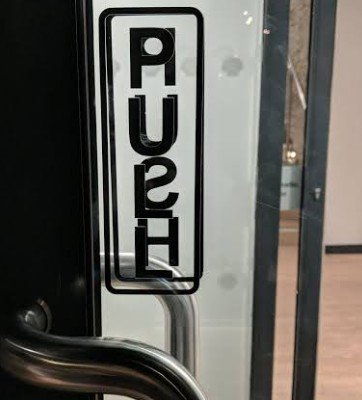
When an architect puts a pull-handle on a push-door, they have broken the physical contract with the user. And when physical design fails, who has to come clean up the mess? Signage.
Interactive Quiz: Are You Smarter Than a Door?
Door Hardware Quiz
Click the hardware you think is correct.
Question 1: Which hardware intuitively means “PUSH”?
Question 2: If a door swings both ways, what should the hardware look like?
The “3-Second Rule” vs. Hardware
Remember the 3-Second Rule of signage? People only give signs a passing glance. But it gets worse with doors: people read the hardware before they ever read the text.
If the hardware is lying to them, the text needs to scream the truth. A tiny font on a clear background won’t override the brain’s instinct to grab a handle.
How to Actually Fix a Confusing Door
If you manage a retail space or office and watch people body-slam your doors daily, you have two options:
- The Expensive Fix: Call a contractor and change the door hardware to flat push plates.
- The Signage Fix: Use high-contrast, impossible-to-miss door vinyl.
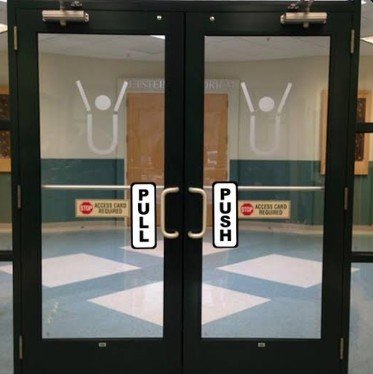
If you have to use signage, make it count. Don’t use small, frosted lettering. Use bold, contrasting colors placed directly at eye level or right above the handle.
The Final Verdict
Great signage shouldn’t just be pretty; it should solve problems. A well-placed “Push” or “Pull” sign isn’t just a label—it’s an apology for bad architectural design.
Comments (0)
No comments yet. Be the first to comment.